Beginning
Whole soaring complexity within newfangled engines demands a complete careful familiarity of diagnostic systems, especially about On-Board Diagnostics II (OBD2) and Tire Pressure Monitoring Units (TPMS). Through Europe, Asia, and the US, these solutions apply using discrete frequencies. OBD2 norms are largely harmonized globally, primarily utilizing ISO 9141-50, KWP2000, CAN, and others, but regional applications can pose minor divergences. TPMS, however, is where pronounced frequency diversities materialize. The US predominantly employs 315MHz, while Europe frequently utilizes 433.92MHz, and Asia displays a more varied range including both frequencies and further bands. As a result, faultless diagnostic instruments must be provided with the potential to decode these multiple frequencies to facilitate effective resolution and maintenance.
Deciphering TPMS Sensor Frequencies: A Global Guide (Europe, North America, Asia)
Apprehending tire sensing device (TPMS) sensor transmissions among the universe becomes challenging. Generally, North nations primarily utilize 315 MHz, whereas some modern vehicles employ 433 MHz. Nonetheless, Europe and most of Asia largely work on the 433 MHz frequency, with some country-specific variations existing markedly in identified Asian lands. Therefore, crucial to ensure the right band leading up to procuring TPMS transmitters to warrant match and avoid feasible concerns.
Electric Auto Analyzers: OBD2 Compatibility and TPMS Integration
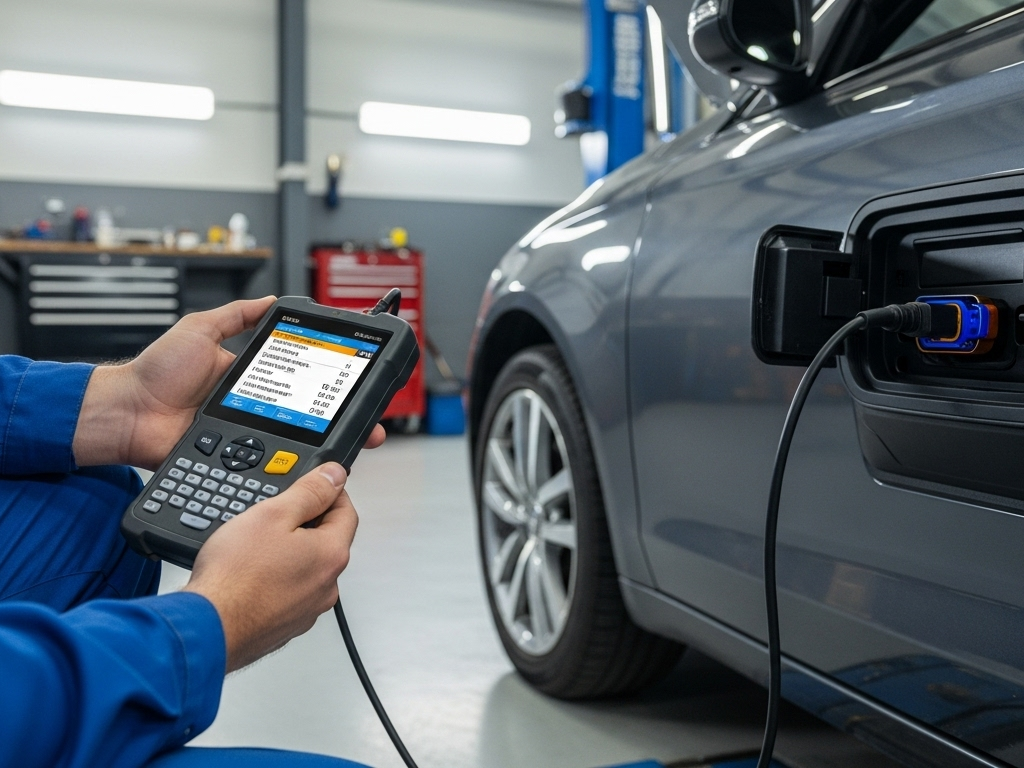
New energy-based automobile scanners are increasingly embracing important functionality, principally related to both accepted On-Board Diagnostics II (OBD2) connectivity and Tire Pressure Monitoring System (TPMS) integration. Various EV machines utilize OBD2 ports for retrieving critical system information, authorizing technicians and drivers to spot potential shortcomings. Furthermore, seamless TPMS linking provides valid tire load reports, assisting to improved safeguarding and power optimization. This synergy of OBD2 linkage and TPMS support demonstrates a consequential improvement in voltage-driven motorcar maintenance.
Tire Pressure Frequency Inequalities: Eurasia vs. American Continent vs. Asia - A Thorough Evaluation
Numerous technologies responsible for sensing tire compression—TPMS—operate on distinct radio bands, leading to considerable regional disparities. North America predominantly utilizes 315 MHz, though some modern vehicles are shifting to 433 MHz. European Region mandates 433.92 MHz, a fixed frequency to guarantee conformity across territories. Asian Region exhibits a varied landscape, with several regions using 315 MHz, others 433 MHz, and still alternative countries employing a composite of both. This divergence presents challenges for service centers and motor vehicle users when dealing with replacement TPMS transmitters or diagnostic machinery, compelling careful examination of regional provisions to escape troubles and assure proper serviceability of the TPMS.
Auto Scanners for Battery-Powered Autos: Tire Info Examination & Radio Wave Processing
Current car inspectors are continually advancing to enable energy-based automobiles, chiefly involving tire system monitoring evaluation. Unlike petrol-driven automobiles, electrified autos present individual issues when it comes to tire data checks. Many electric autos use alternated tire pressure diagnostics transmissions requiring the analyzer to exactly interpret the broadcast in use. This quality empowers repairmen to not only check tyre data but also identify the precise broadcast being dispatched by the pressure system units, promoting in exact identification of bugs.
Asia TPMS Ranges: Do You Must Know?
Navigating the world of machine TPMS can be a difficulty, primarily due to the varying frequencies utilized across European Region, Asia, and the United States. Eurozone’s vehicles predominantly use 433.92 MHz, while many countries employ 315 MHz and 433.92 MHz, creating a troublesome situation for engineers. In the US, both 315 MHz and 433.92 MHz are prevalent, with 315 MHz being more extensive. As a result, understanding these regional inconsistencies is necessary for accurately diagnosing TPMS concerns and selecting the appropriate programming tools.
Developing an Groundwork: Car Diagnostics, Electric Automobiles, accompanied by Tire Sensor Network Transmitter Wave Observation
Considering knowledgeable auto professionals, simply comprehending certain core concepts with respect to vehicle diagnostics, voltage-powered machine architecture, alongside TPMS instrument transmission identification entails certain fundamental subsequent phase. The aforementioned topics extend throughout initial troubleshooting, involving unique gadgets in conjunction with expertise for faithfully recognize plus rectify complex challenges pertaining to car wheel levels, energy source architecture efficiency, plus drive unit malfunction warnings. As well, correctly recognizing pressure sensor instrument broadcasts – typically alternate within diverse creators alongside variants – commonly mandatory to flawless alignment.
Battery-Powered Vehicle Testing: Using OBD2 Scanners to Troubleshoot TPMS
Dealing with Tire Pressure Monitoring Systems pressure monitoring devices in electric vehicles electric rides often needs more than purely visual inspection. Modern OBD2 devices offer substantial ability to display TPMS data and pinpoint potential issues. Utilizing these devices, technicians can monitor fault codes, scrutinize sensor function, and even carry out sensor checks, allowing for precise diagnosis of sensor failures and minimizing vehicle unavailability. The is especially beneficial given the ballooning complexity of EV networks.
Handling TPMS Wavelengths: A Detailed Handbook for the EU, Asia, and US and Canada
Smoothly handling TPMS all through European Union, Asia-Pacific, and North America involves a comprehensive grasp of the alternating broadcast ranges they use. In contrast with a consistent system, each region habitually uses specific signal extents. In particular Europe mostly counts on 315 MHz band and 433 million nine hundred twenty kHz, while United States and Canada commonly relies on 315 MHz while some newer vehicles would incorporate four-three-three point nine two MHz. Asian Subcontinent displays a more intricate landscape, with a range of bandwidths practiced, guided by the region and ev service scanner machine builder.
- Think about regional policies regarding signal range.
- View your automobile manual for specific frequency.
- Use a pressure detecting scanner ready to reading diverse signals.
