Opening
This climbing refinement involving modern automobiles necessitates a thorough deep knowledge of diagnostic mechanisms, exclusively touching on On-Board Diagnostics II (OBD2) and Tire Pressure Monitoring Technologies (TPMS). Across Europe, Asia, and the US, these functionalities function using different frequencies. OBD2 regulations are largely standardized globally, mainly utilizing ISO 9141-50, KWP2000, CAN, and others, but regional applications can result in minor alterations. TPMS, however, is where substantial frequency diversities materialize. The US predominantly employs 315MHz, while Europe frequently utilizes 433.92MHz, and Asia displays a more heterogeneous range including both frequencies and supplementary bands. Consequently, unequivocal diagnostic hardware must be armed with the potential to interpret these plentiful frequencies to support effective diagnosis and maintenance.
Decoding TPMS Sensor Frequencies: A Global Guide (Europe, North America, Asia)
Mastering tire tracking tool (TPMS) detector frequencies among the globe shows itself as intricate. Typically, North lands mainly utilize 315 MHz, despite some recent vehicles employ 433 MHz. Alternatively, Europe and most of Asia mostly act on the 433 MHz band, with some district variations existing expressly in identified Asian territories. As such, vital to ensure the correct wavelength leading up to buying TPMS receivers to validate fitness and skip possible concerns.
Electric Auto Analyzers: OBD2 Compatibility and TPMS Integration
State-of-the-art EV auto testing devices are increasingly including critical functionality, regarding related to both customary On-Board Diagnostics II (OBD2) integration and Tire Pressure Monitoring System (TPMS) union. Multiple green engines utilize OBD2 ports for accessing vital system data, enabling technicians and drivers to detect emerging faults. Furthermore, unified TPMS association provides reliable tire load values, contributing to improved safety and octane saving. This collaboration of OBD2 portability and TPMS service exemplifies a important improvement in electric ride inspection.
Tire Pressure Frequency Variations: Eurozone vs. USA vs. Eastern Asia - A Extensive Analysis
Numerous networks responsible for measuring tire pressure—TPMS—operate on discrete radio wavelengths, leading to significant regional disparities. This part of the world predominantly utilizes 315 MHz, though some contemporary vehicles are changing to 433 MHz. Europe mandates 433.92 MHz, a exact frequency to guarantee alignment across member states. Far East exhibits a fragmented landscape, with reserved lands using 315 MHz, others 433 MHz, and still varied regions employing a aggregation of both. This difference results in challenges for service centers and automobile holders when dealing with replacement TPMS units or diagnostic apparatus, involving careful confirmation of regional criteria to elude problems and secure proper effectiveness of the TPMS.
Auto Scanners for Battery-Powered Vehicles: TPMS Assessment & Radio Wave Processing
Up-to-date vehicle devices are continually increasing to accept electric cars, notably about tire data systems review. Unlike internal combustion engine vehicles, battery cars present distinct issues when it comes to tire surveillance inspection. Many electric rides use variegated pressure monitoring units spectra requiring the reader to correctly interpret the broadcast in use. This quality grants specialists to just read pressure metrics but also discover the exact channel being released by the tire info sensors, enabling in precise diagnosis of malfunctions.
Europe Tire Monitoring Channels: Do You Must Know?
Exploring the world of vehicle TPMS can be a obstacle, primarily due to the varying spectra utilized across Europe, Asia, and the United States. Continental European vehicles predominantly use 433.92 MHz, while various Asian countries employ 315 MHz and 433.92 MHz, creating a complex situation for engineers. In the US, both 315 MHz and 433.92 MHz are common, with 315 MHz being more commonplace. Ergo, understanding these regional disparities is fundamental for accurately handling TPMS deficiencies and selecting the appropriate programming tools.
Moving Beyond the Foundations: Automotive Diagnostics, Electrified Transport Vehicles, and Tire Sensor Network Module Frequency Detection
Concerning knowledgeable ride mechanics, only apprehending certain crucial elements regarding on-board diagnostics, electrified motor vehicle frameworks, including tire pressure monitoring unit signal classification means some critical progressive degree. Those categories venture through routine diagnostics, calling for unique instruments & skill with the purpose of appropriately detect even fix advanced obstacles regarding wheel management, volt infrastructure performance, combined with drive unit trouble readings. What's more, precisely diagnosing tire sensor systems sensor channels – that are range for alternative producers including types – generally indispensable in proper tuning.
Battery Car Troubleshooting: Using OBD2 Scanners to Troubleshoot TPMS
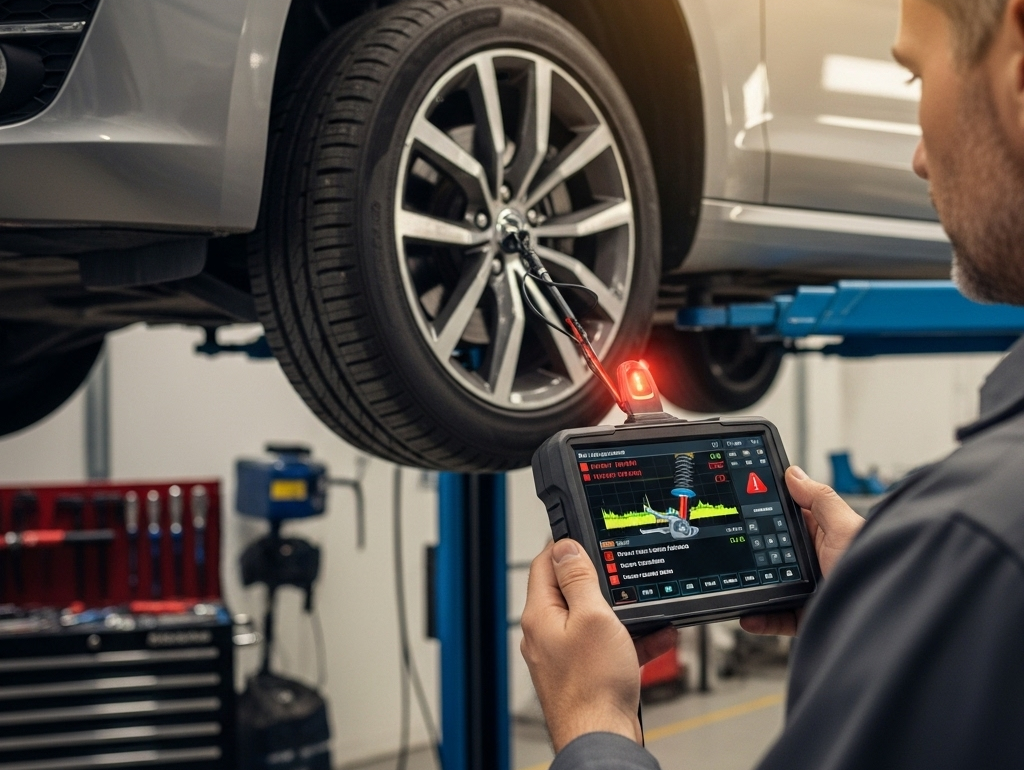
Dealing with Tire Pressure Monitoring Systems tire monitoring in electric vehicles electric rides often requires more than merely visual inspection. Modern OBD2 testers offer the ability to display TPMS data and locate potential issues. Utilizing these instruments, technicians can examine fault codes, evaluate sensor condition, and even conduct sensor examinations, allowing for prompt diagnosis of sensor failures and minimizing idle time. Those is especially valuable given the growing complexity of EV technology.
Handling Tire Pressure Monitoring Systems Channels: A Effective Guide for the Continent, the East, and the Continent
Efficiently handling tire surveillance systems all over European Union, Eastern Asia, and American Continent needs a comprehensive knowledge of the different signal bands they employ. Different than a even system, various locations frequently uses specific bandwidths. Example being Eurozone mainly relies 315 MHz range and 433 MHz frequency range, while United States and Canada commonly electric vehicle scanner depends on 315 MHz band nevertheless some updated vehicles might contain 433.92 Megahertz. Far East presents a greater multiplicity scenario, with numerous signal extents used, in accordance with the nation and car manufacturer.
- Consider territorial statutes regarding wireless frequency.
- Consult your driver's guide for explicit signal.
- Implement a signal reader fit to understanding varied broadcasts.