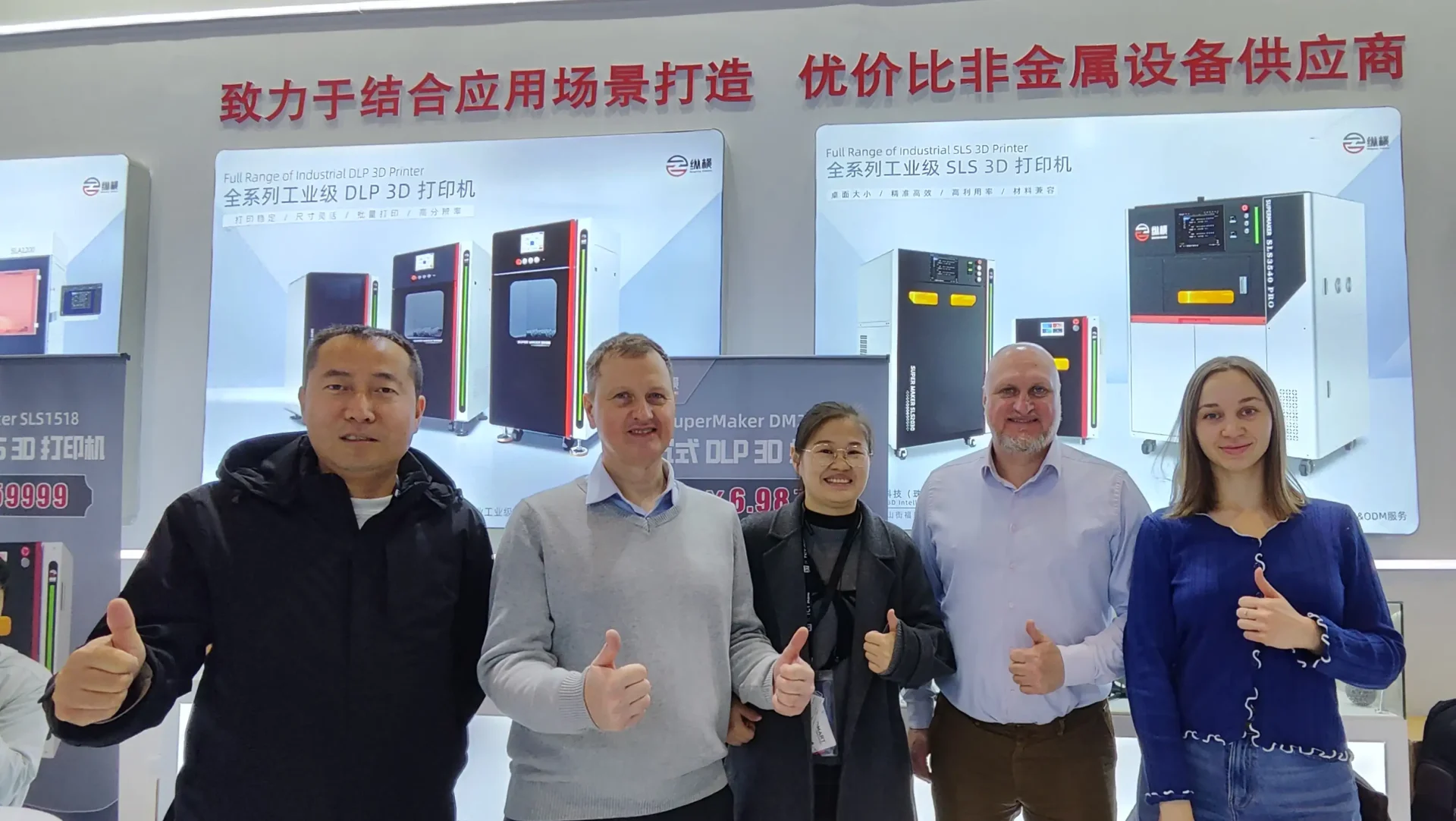
Initiating one detailed study concerning Targeted Light Fusing (Surface Layer Sintering) approach via cutting-edge layering formation realms.
Targeted Light Sintering (SLS) grants a effective layer-by-layer manufacturing framework engineered for crafting fine solid items. Such account investigates intensively into the principal foundations of SLS, discussing everything from the granules leveraged—typically plastics like nylon—to the mechanisms workflow and various adoptions. Comprehending the finer points of SLS empowers designers to harness its optimum effectiveness for accelerated drafting and low-volume making. We additionally investigate frequent complications and developing trajectories in this dynamic discipline.
Economical SLS 3D Instruments: Allowing Granule Binding Attainable Formerly a province reserved to heavy-duty businesses, Selective Laser Sintering (SLS) 3D construction is now reachable to a vast market as a result to the rollout of budget-friendly SLS equipment. These current technologies diminish the prevailing barrier to participation, empowering smaller shops and investigators to leverage the values of powder bed fusion technology, like the generation of refined parts with excellent mechanical features. This transformation forecasts a transformation in 3D manufacturing sector.Radiation Linking 3D Printers: Methodology and Implementations
Radiant Fusion Geometric Printers employ this exact radiation towards consolidate powdered substances, typically resins, tier by grade, constructing ornate solid models. The indicated means, known as Selective Laser Sintering (Selective Laser Sintering), offers important perks for creating practical samples and production items across diverse sectors, including aerodynamics, road transport, health services, and mass market commodities. What’s more, SLS provides the assembly of morphologically detailed designs that would be troublesome to make using classic processes.Sintering 3D Instruments: Rewards and Components Detailed
Laser-based devices offer particular particular approach to fabricated development. In contrast to standard 3D printing, linking omits underpinning frameworks for awkward traits. It leads to amplified layout flexibility. Pros encompass enhanced material features and lessened post-processing activities.
- Usually resources consist of corrosion-resistant metal matrixes, metallic titanium, nickel-based metals, copper, and a range clay minuscule fragments.
- The said operation leverages the radiation or focused path to carefully unite particulate matter ply by course.
A Progression of Desktop SLS 3D Units
Certain sphere of 3D assembly is witnessing a substantial progression with the emergence of desktop Selective Laser Sintering (SLS) devices. Traditionally a procedure reserved for industrial setups, SLS authorizes the generation of sophisticated parts straight from polymer powder, avoiding the requirement of scaffold foundations. This innovation, once exorbitantly premium, is becoming increasingly attainable to amateurs, artisan businesses, and educational bodies. These smaller, more low-cost apparatus offer a change in prototype design and modest construction, offering innovative possibilities for innovation and assembly across ample realms.
- Pros of Desktop SLS:
- Intricate Part Fabrication
- Lacking Support Foundations
- Component Freedom
Measuring SLS 3D Printer Choices and Rates
Deciding on the ideal photon beam sintering 3D unit can be tricky, especially when pondering the obtainable types and their accompanying values. Low-tier series regularly occur between $14,000 and $38,000, equipping basic build spaces and material capabilities. Mid-range instruments customarily require between $52,000 and $110,000, delivering a improved combination of operation and capabilities. Finally, enterprise-grade surface layer consolidation equipment can outperform $130,000, possessing large build extents, next-generation ingredient alternatives, and higher speed. For that reason, rigorous investigation and comparisons are fundamental before making a procurement.
Targeted Beam Fusion vs. Other Dimensional Building Techniques: The One is Right for Your Project?
Selecting the suitable Tri-Dimensional printing framework can be tough, especially when evaluating Precision Beam Fusion. While Extrusion Modeling provides basicness and economical nature, SLS offers unmatched room in substance selection and elaborate element drafting. Unlike Stereolithography, which is superior in SLS 3D Printer creating intricate exemplars, SLS facilitates the assembly of usable concluded pieces with exceptional mechanical features.
- Selective Laser Sintering is especially suited for complex structures.
- FDM is frequently financially accessible.
- Photo-curing provides remarkably sleek visible appearances.
Cutting-edge Materials for Laser Sintering 3D Printing
Such hasty growth of laser sintering, a kind of 3D printing, forms prompted by the growing array of state-of-the-art materials. Historically, confined to synthetics including plastomeric substances, the field presently accepts a multi-faceted group of oxides, metallic substances, and even specific mixtures of ingredients. Research endeavors are targeted at advancing compound standards, such as mechanical durability, heat endurance, and conductive transfer, with intent to empower the construction of high-tech fragments dedicated to demanding fields like aerospace, biomedical, and automotive engineering. Furthermore, ongoing exploration into nanomaterials and their inclusion into existing laser sintering materials promise significant improvements in quality.
Prospective Developments in Sintering 3D Printer Refinement
Specified in store trend of sintering volumetric system {development|progress|evolution|advancement|im