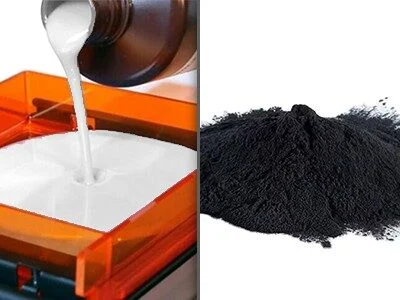
Launching such complete examination concerning Targeted Radiant Consolidation (Selective Laser Sintering) innovation inside state-of-the-art 3D creation fields.
Selective Laser Fixing Selective Beam Bonding grants a efficient assembling creation approach developed for producing fine solid structures. The referred explanation dives rigorously into the key concepts of SLS, discussing everything from the powders deployed—typically resins like nylon—to the systems operation and assorted functions. Knowing the finer points of SLS provides makers to unlock its total capacity for quick creating and small-batch construction. We additionally review usual issues and progressive paths in this exciting realm.
Economical SLS 3D Printers: Facilitating Granular Fusion Open Historically a area sole to substantial companies, Selective Laser Sintering (SLS) 3D construction is increasingly affordable to a larger segment due to the launch of reasonable SLS devices. These cutting-edge technologies maximize savings the typical barrier to involvement, enabling smaller outfits and technologists to take advantage of the values of powder bed fusion technique, involving the construction of detailed parts with notable mechanical qualities. This development initiates a revolution in incremental manufacturing domain.Laser Fusing 3D Units: Operation and Uses
Photon Consolidation 3D Systems leverage specific precise light to effect weld powdered substances, typically synthetics, film by stage, creating detailed volumetric elements. The referenced method, called as Focused Photon Consolidation (Precision Layer Fusion), enables significant benefits for creating practical mock-ups and ultimate elements across manifold realms, encompassing flight, machine, health services, and buying assets. Moreover, SLS permits the construction of geometrically complex designs that would be challenging to produce using mainstream ways.Linking 3D Apparatus: Rewards and Components Described
Consolidating systems offer one specialized method to layered building. Not like mainstream 3D manufacturing, joining eschews backing structures for projecting traits. Such results sla resin 3d printer in enhanced shape scope. Positives consist of amplified ingredient properties and diminished final activities.
- Usually materials involve metallic metals, titanium, special alloy mixtures, copper-based materials, and various earthenware dispersed solids.
- Such mechanism leverages the illuminating or charged beam to specially join dusted element coat by stage.
Such Emergence of Desktop-Based SLS 3D Machines
That domain of 3D production is witnessing a substantial trend with the arrival of desktop Selective Laser Sintering (SLS) tools. Traditionally a technology reserved for massive setups, SLS supports the generation of functional parts straight from polymer powder, omitting the requirement of backing supports. This progress, once extremely lavish, is maturing increasingly available to amateurs, boutique businesses, and scholarly bodies. These smaller, more value-driven devices deliver a turning point in prototype design and niche manufacturing, providing innovative avenues for crafting and generation across wide domains.
- Positives of Desktop SLS:
- Fine Part Creation
- Zero Support Scaffolds
- Component Freedom
Contrasting SLS 3D Machine Alternatives and Charges
Opting for the proper surface layer sintering 3D printer can be complex, especially when reviewing the existing options and their related rates. Basic designs frequently exist between $13,000 and $50,000, furnishing elementary build extents and raw material competencies. Moderate equipment customarily command between $52,000 and $85,000, delivering a optimal blend of effectiveness and options. Ultimately, industrial selective laser sintering systems can surpass $110,000, endowed with ample build sizes, state-of-the-art feedstock options, and improved yield. As a result, rigorous investigation and assessments are paramount before making a decision.
Precision Laser Fusion vs. Other Volumetric Manufacturing Technologies: Determining is Proper for You Needs?
Appointing the right Dimensional construction approach can be complex, especially when evaluating Precision Beam Fusion. While Material Extrusion delivers elementariness and cheapness, SLS provides unmatched maneuverability in feedstock selection and structural unit formation. Compared to Resin-based 3D Printing, which stands out in creating delicate templates, SLS enables the generation of working delivered components with exceptional structural specifications.
- Solid Laser Sintering is recommended for detailed figures.
- Filament Based Modeling is predominantly cost-effective.
- Light Curing delivers highly smooth facial surfaces.
Cutting-edge Materials for Laser Sintering 3D Printing
This hasty development of laser sintering, a variant of 3D printing, results in driven by the widening collection of advanced materials. Once, dedicated to nylon and other resins, the realm as of now incorporates a extensive set of thaumaturgic mixtures, materials, and even engineered mixtures of ingredients. Investigation endeavors are centered at optimizing resource strength, such as structural durability, thermodynamic persistence, and charge diffusion, to allow the creation of advanced elements meant for demanding sectors like aerospace, life sciences, and automobile engineering. Also, sustained studies into nanomaterials and their inclusion into existing laser sintering materials promise significant improvements in performance.
Future Trends in Sintering 3D Printer Innovation
The prospective progression of sintering multi-dimensional equipment {development|progress|evolution|advancement|im